In Kazakhstan, as in many other countries, the process of obtaining a doctorate is a challenging but important stage in a researcher's life. This article outlines the publication requirements for dissertation defense in 2024.
Recently, the legislative norms of the Republic of Kazakhstan in the field of science were amended by the Order "On Amendments and Supplements to Certain Orders of the Minister of Education and Science of the Republic of Kazakhstan" dated January 9, 2023.
Today, we'll examine only those aspects of the law that pertain to scientific publications, and also provide advice on which option is best for applicants.
Let's consider this point:
📍 Order of the Minister of Education and Science of the Republic of Kazakhstan «On the Approval of the Rules for the Awarding of Degrees.».
📍 Rules for the Awarding of Academic Degrees.
Main changes:
At the regulatory level, distinctions are made between types of scientific documents: Articles (Article), Reviews (Reviews), Articles in Press (Articles in Press), Conference Papers, and Proceedings (publications must meet certain types). Let's take a closer look.
Article — an original article with the conducted research and publication of the results of the research that the doctoral student is studying.
Review — A systematic review or meta-analysis is a review article on the topic of the applicant's research.
Article in press — article in print — article accepted and posted in a separate section of the journal — articles are being prepared for publication.
Conference Paper, Proceedings — conference abstracts.
Pre-publication rules for admission to defense
There are five options a candidate can choose to access protection. We'll describe each one now and, at the end of the article, we'll discuss the best option:
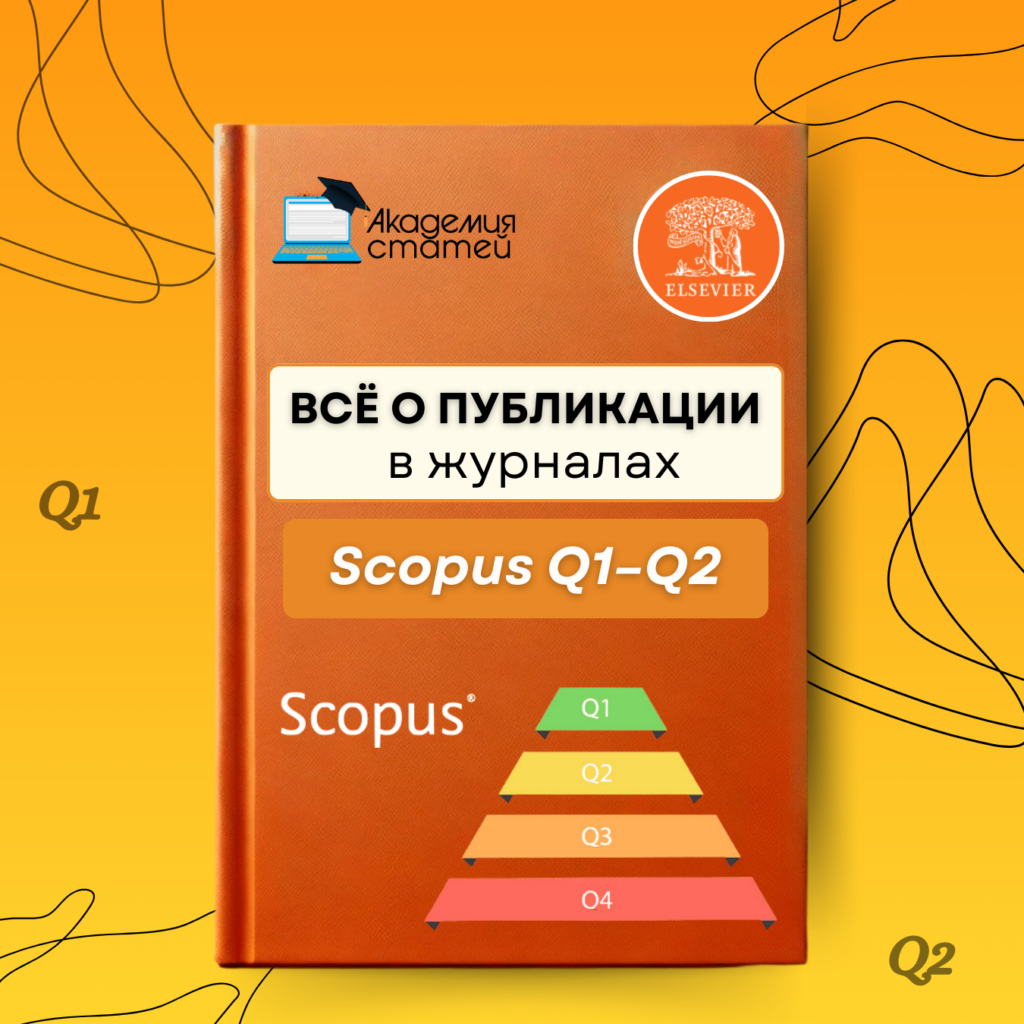
🔹 One publication of an article or review in a journal included in the Web of Science Core Collection (AHCI, SCIE, SSCI) with a Q1–Q4 ranking / Scopus ranking of at least the 25th percentile + 3 articles in KKSON journals
🔹 At least 2 original articles or 1 original article and 1 review article published in international peer-reviewed scientific journals indexed in the Web of Science Core Collection (AHCI, SCIE, SSCI) with a Q1–Q3 ranking / Scopus with a percentile ranking of 35+
🔹 At least 1 article in an international peer-reviewed scientific journal indexed in the Web of Science Core Collection (AHCI, SCIE, SSCI) with a Q1–Q2 ranking / Scopus at or above the 35th percentile.
🔹 At least one research article published in a journal included in the Web of Science Core Collection with a Q1 ranking or a Scopus percentile of 75+
🔹 A chapter in a monograph (the doctoral student must have contributed at least 3 printed sheets) published by Elsevier, Brill, CRC Press, DeGruyter, Edward Elgar Publishing, John Wiley & Sons, McGraw Hill, Palgrave Macmillan, Peter Lang, Prentice Hall, Routledge, Sage Publications, Springer Nature, Taylor and Francis, Wolters Kluwer, or by a university press ranked in the top 100 of the U.S. News Best Global Universities Rankings, the Academic Ranking of World Universities, or the Times Higher Education World University Rankings (hereinafter referred to as “publishers on the specified list”).
A few more nuances:
🔸 Submissions to international peer-reviewed scientific journals in the multidisciplinary field are accepted.
🔸 According to the Journal Citation Reports, the quartile is determined based on the impact factor.
For specialties related to the Kazakh language and literature, Kazakh philology, history of Kazakhstan, and Kazakh philosophy, researchers are allowed to defend their dissertations if they have at least 5 articles in KKSON journals, one of which is in English, and 2 oral presentations at international scientific conferences.
If a scientist published an article in a Scopus/Web of Science publication that was excluded from the database due to violations, then the publication for the current and previous years is not taken into account.
Quartiles and percentiles of Scopus and Web of Science journals are taken into account for the year of publication or for the year preceding the year of publication.
So which of the proposed options is better to choose?
Academy of Articles has extensive, long-term experience in publishing scientific articles in more than 100 international publications of various levels
Let's consider them all in order:
Option 1 This option will be the fastest if you have KKSON publications that can accept and publish your articles without any problems. Getting one publication in journals with a 25th percentile is not as difficult as with the previous option. If you don't have access to KKSON publications, it's best to discard this option and instead fulfill the requirements in point 2.
Option 2 — one of the simplest options. We often recommend this option to our clients because it's relatively quick and more reliable than the third option (we'll explain why in a moment).
Option 3 — the simplest — but there could be a problem if the publication loses its indexation or percentile. With the second option, you have two articles and, in any case, you diversify the risks and will definitely defend your thesis.
Option 4 — For certain fields of knowledge where it's possible to publish quickly in journals with a 75% percentile, this option is definitely worth choosing, as it's both cheaper and faster. However, this method also has one drawback: the journal's rank may drop, and then the article won't be counted. If you're confident in the journal's rank at 100% and have the opportunity to publish in this way, you should choose this option.
Option 5 — the most difficult — publishing a monograph in one of these journals is very difficult; we do not recommend considering it unless you have great resources, several tens of thousands of dollars, and several years of patience for such a publication.
Conclusions:
Thus, the article emphasizes the importance of maintaining high standards at every stage of obtaining an academic degree in Kazakhstan, from academic preparation and dissertation writing to the publication of research results. This contributes to the development of science in the country and the professional development of future scientists. And as we see it in 2024, one of the most important requirements is the publication of research results in peer-reviewed scientific journals. This not only demonstrates the applicant's scientific activity but also confirms the relevance and significance of their research for the scientific community.
Academy of Articles We provide comprehensive services for publishing scientific articles in international journals indexed in Scopus and Web of Science. Over the past four years, we have published over 1,100 articles in reputable Scopus and Web of Science journals. If you need a full publication package to defend your scientific article, submit a request on our website, and our managers will contact you with detailed advice!