Introduction
Over the past few years, attention to predatory scientific journals has increased dramatically.
The reason is simple: regulators are tightening requirements, and the consequences of erroneous publication have become too costly—both financially and in terms of one’s academic career.
In 2024–2025, the rules regarding academic integrity became even stricter.
Articles published in journals that engage in predatory practices are not counted:
for a PhD defense;
to be awarded the title of associate professor;
to be awarded the title of professor;
to participate in performance evaluations and competitive selection processes.
Many people still don’t understand how to check a journal in Scopus or how to find out whether a journal is currently indexed in Scopus. And this is a key point: the status can change quickly, and even «yesterday’s Q2» can become a risk tomorrow.
And despite this, in 2024–2025, more than 3,000 Kazakhstani scientists published their work in precisely these journals.
The consequences are not isolated incidents.
Over the past two years, there have been hundreds of canceled or postponed thesis defenses, disrupted applications for academic degrees, and losses amounting to hundreds of millions of tenge.
Based on just the five journals discussed in this article, direct financial losses exceeded 320 million tenge.
In this article, we'll take a look at the five journals in which Kazakhstani researchers have lost the most funding over the past two years.
You will learn:
the names of specific journals;
how many researchers have published in each of them;
how many articles were accepted and published;
what amounts the authors actually lost.
This is neither a theoretical overview nor a «scare story.».
This is a dry analysis of the market—so you don't repeat the mistakes of others.
When an author is looking for a list of Scopus-indexed journals, it is important to understand that formal indexing alone does not guarantee acceptance—the key factors are the journal’s status at the time of submission and its editorial practices.
International Journal of Innovative Research and Scientific Studies
Quartile: Q2
Percentile: 65+
Industry: Multidisciplinary
This journal became the biggest academic headache for Kazakhstani scholars in 2025.
The journal had sufficient percentile and quartile rankings in Scopus, which:
were eligible to defend their PhD theses;
were counted toward the associate professor title;
met the requirements for the title of professor.
That is precisely why it has become a major focus for Kazakhstani authors.
The Scale of the Problem
In 2024–2025, more than 1,300 Kazakhstani scientists had their work published in this journal.
The 2025 Predator Model
Starting in 2025, the journal effectively adopted an aggressive, predatory practice:
accepted any manuscripts;
There was no peer review;
Fixed publication fee: 1,200 USD;
Approval process—a few days, without a genuine scientific evaluation.
The Academy of Articles has repeatedly warned about the risks associated with this journal.
However, the desire to quickly «meet the requirements» proved stronger than caution.
The Collapse of Indexation
In 2025, 1,230 articles published in this journal were indexed in Scopus.
Following a review by the CSAB:
All articles from 2025 were removed from the Scopus database;
The journal was completely removed from the index.
In fact, all of the publications from that year have lost any academic value.
Implications for Scientists
The outcome was disastrous for the authors:
dozens of canceled PhD defenses;
Submissions that have been canceled or not accepted for:
associate professor;
professors;
Disrupted academic paths and lost years of training.
And all of this happened after the funds had already been paid.
Financial losses
According to conservative estimates, the total financial losses incurred by Kazakhstani scientists in this journal amounted to:
≈ 150,000,000 tenge
And that's without taking into account indirect losses—canceled contracts, delayed reviews, and republications in other journals.
A brief conclusion
This case clearly demonstrates:
Formal compliance with requirements today is no guarantee of safety tomorrow.
Even a journal with a Q2 ranking and a high percentile can, in just one year, become a source of widespread academic failure if its editorial policy spirals out of control.
Forum for Linguistic Studies
Quartile: Q2
Percentile: 65+
Industry: Linguistics & Language
This journal rightfully ranks second on our "anti-rating"—and became the favorite platform for Kazakhstani philologists and literary scholars in 2024–2025.
During this period, the journal published articles by more than 650 Kazakhstani scholars, including a large number of doctoral candidates preparing to defend their PhD dissertations.
Why the magazine inspired trust
Unlike the first case, Forum for Linguistic Studies did not appear to be overtly predatory:
The journal has been indexed in Scopus for a long time;
was subject to peer review, albeit primarily a formal one;
did not display an aggressive «we'll take anything» attitude;
It was positioned as a specialized journal specifically for humanities scholars.
That is precisely what created a sense of relative security, especially among philologists.
Scope of Publications
Between 2024 and 2025, the journal published approximately 150 articles, but the number of authors involved is significantly higher due to:
co-authorship;
collective publications;
widespread participation by doctoral students.
As a result, more than 650 Kazakhstani scholars had planned to use these articles for their dissertations or to advance their academic careers.
The CSAB's Decision and Exclusion from Scopus
After a second review by the CSAB, the journal still failed the audit.
In December 2025 Forum for Linguistic Studies was officially removed from Scopus. Although the articles were not deindexed, as in the previous case, this still did not help Kazakhstani doctoral students avoid problems.
The consequences were not long in coming:
Articles are no longer counted toward the PhD requirements;
Dozens of trials were canceled or postponed.
This hit doctoral students who were in the final stages of their studies particularly hard.
Publication Costs and Financial Losses
The cost of publishing in the journal ranged from 800 to 1,600 USD, depending on «discounts» and submission requirements.
For the calculation, let's use an average price of 1,200 USD.
As a result, the average financial losses incurred by Kazakhstani scientists amounted to:
≈ 91,000,000 tenge
And that's just the direct costs of publication, not counting resubmissions, missed reviews, and time lost.
A brief conclusion
This case highlights another, equally dangerous aspect of the problem:
A journal may appear «moderately reliable,» but it may not stand up to further scrutiny.
This is particularly critical for humanities disciplines, as there are significantly fewer alternatives for quick and accurate publication.
Journal of Infrastructure, Policy and Development
Field: Social Sciences (miscellaneous)
Percentile: 35+
This magazine ranks third on our list.
The scale here is smaller than in the two previous cases, but the losses for Kazakhstani scientists were still significant.
Between 2024 and 2025, the journal published about 40 articles, with contributions from approximately 200 researchers.
Why the magazine was chosen
Formally, the journal looked acceptable:
indexing in Social Sciences (miscellaneous), which is suitable for all social sciences;
the 35th percentile or higher, which:
was eligible to defend his dissertation;
counted toward the title of associate professor.
A Problem That Was Underestimated
In 2024–2025, the journal accepted too many articles, most of which were indexed in Scopus.
Following the reviews, the articles were not deleted en masse from the database.
A Critical Moment for Defense
For a PhD defense, the journal's status at the time of the defense is important.
And if a journal is removed from Scopus, the article simply won't be accepted for the defense—even if it still appears in the database on paper.
This is precisely what became a problem for some doctoral students who were counting on these publications in 2025.
Publication Costs and Financial Losses
The official publication fee was 1,800 USD.
Taking into account possible discounts and individual terms, the average financial losses incurred by Kazakhstani scientists in this journal are estimated at:
≈ 30,000,000 tenge
These are direct costs, excluding resubmissions and time lost.
A brief conclusion
This case study clearly demonstrates:
The fact that articles are not deleted ≠ security for protection.
For doctoral students, what matters most is not whether the article is «still pending in Scopus,» but what the journal’s status is on the day of the defense.
And this is exactly where many made a fatal mistake.
Journal of Ecohumanism
Quartiles and indexation directions:
Q2 / 50+ — Social Sciences, Cultural Studies
Q3 / 35+ — Social Sciences, Social Sciences (miscellaneous)
This magazine ranks fourth on our list.
In terms of scale, it is almost identical to the previous case, but it has become particularly appealing to scholars in the humanities and social sciences.
In 2024–2025, the journal published 39 articles authored by 170 Kazakhstani scientists.
Why the magazine was so widely chosen
Journal of Ecohumanism It looked very appealing from a formal standpoint:
Q2/Q3 quartile in the social sciences;
the corresponding percentiles for:
defense of the dissertation;
award of an academic degree;
a broad range of humanities topics;
the absence of complex editorial barriers.
But the main trigger was something else.
«Fast and with no unnecessary questions»
The magazine openly proposed:
very quick publication;
the lack of a full peer-review process;
minimal communication with the editorial staff;
A predictable result after payment.
For many authors, this seemed like the ideal option, especially given the deadlines for their thesis defenses.
What Happened Next
On the surface, the situation didn't look «all that bad»:
The published articles remain indexed in the Scopus database;
There was no mass removal of materials.
But the key point is something else.
Following a review, the journal was removed from Scopus.
And that's enough to:
The articles did not count toward the PhD defense;
Publications were not accepted as part of applications for academic ranks.
Financial losses
The cost of the publication was 1,200 pounds sterling.
Based on the results for 2024–2025, the total direct financial losses incurred by Kazakhstani scientists in this journal are estimated at:
≈ 33,000,000 tenge
And once again—excluding duplicate publications and failed defenses.
A brief conclusion
This case study definitively debunks a popular myth:
«If the article is still in Scopus, then everything is fine.».
For review committees, the journal's status is important, not just the technical fact that an article is included in the database.
And the Journal of Ecohumanism has become yet another example of how speed and the lack of peer review result in a complete loss of results.
Journal of Cultural Analysis and Social Change
Journal of Cultural Analysis and Social Change
Field: Social Sciences, Cultural Studies
Percentile: Q2 / 70%
This is the last magazine on our list and, at the same time, one of the most recent case studies from 2025.
It is precisely these types of magazines that are the most dangerous, because at first glance they appear flawless and have no obvious «red flags.».
How It All Began
In August–September 2025, the journal began sending out invitations to submit manuscripts on a large scale, offering rapid peer review and publication in a journal indexed in Scopus.
Early warning signs that many ignored
At the Article Academy, two things immediately caught our attention:
Constant, aggressive email campaigns offering to publish content;
an emphasis on the rapid acceptance of articles without a clearly defined peer-review process.
This is a classic indicator of a predatory model.
Dozens of Kazakhstani scientists have contacted us with questions about this journal, and our answer has been unequivocal:
Do not submit.
What Happened in Practice
Those fears were confirmed very quickly.
Magazine:
did not conduct a genuine review;
accepted all submitted materials;
From September through December 2025, it accepted about 1,000 articles.
To put this into perspective:
Previously, the journal published about 20 articles a year.
And then, in December, he published two issues with more than 1,000 articles—almost instantly.
Implications for Kazakhstani Authors
As a result:
About 30 articles by Kazakhstani scientists were published;
More than 140 authors contributed to the publications;
The cost of a single publication was 1,200 USD.
Total direct financial losses amounted to:
≈ 18,000,000 tenge
In December 2025, the journal was very quickly removed from Scopus.
Technically, the articles are still displayed in the database, but as previous cases have shown, this doesn't change anything.
Why doesn't this help when defending?
The following are of fundamental importance to the committees:
journal status,
rather than simply the technical fact that the article is indexed in Scopus.
If a journal is excluded from Scopus, the article will not be accepted for a PhD defense or for the award of an academic title.
That is exactly why this case study is the perfect way to wrap up the list:
It shows just how quickly an «ideal» magazine can go up in flames.
A brief conclusion
Journal of Cultural Analysis and Social Changes — an example of how:
high percentile;
good visual presentation;
active invitations
can turn into a complete waste of money and academic effort in just a few months.
What to Do to Avoid Repeating These Mistakes
In most of the cases described above, the problem was not the quality of the research,
but rather the decision to choose a journal on one's own without conducting a thorough review.
For an author with no systematic experience in international publishing,
it is extremely difficult to choose the right journal on their own.
This is especially true in a situation where journals actively offer
«fast publication,» appealing to deadlines for thesis defenses or performance reviews.
It is precisely this temptation that causes most inexperienced doctoral students
and researchers, who are submitting to international journals for the first time, to "fall by the wayside.".
That is precisely why many Kazakhstani scholars who successfully defended their PhD
and received their academic titles in 2024–2025, chose the «turnkey» publication format in Scopus.
With this plan, you get:
a professional review of a scientific publication prior to publication;
guaranteed publication and indexing in Scopus;
Custom writing of a scientific article
or professional editing of your manuscript.
It's not about «faster,» but about safer.
It is precisely this approach that helps avoid situations where,
where a formally indexed journal, after a few months,
is no longer accepted for the defense of a dissertation or for obtaining an academic degree.
General Conclusions
The cases discussed in this article vary in scale, industry, and the circumstances leading to their exclusion from Scopus.
But they all share one common factor—the temptation of quick publication.
It is this that most often becomes a trap for:
inexperienced doctoral students;
associate professors who are rushing to «meet the requirements»;
researchers who are under pressure from deadlines for their dissertation defenses or performance reviews.
The problem is much bigger than it seems
In 2024–2025, more than 3,000 Kazakhstani researchers published articles in journals with predatory or questionable practices.
And it's important to understand:
In this article, we've covered just the 5 most well-known and widely read magazines.
In addition to these, there were others—less public, less «high-profile,» but no less problematic.
By a conservative estimate, there were at least 5–10 such journals—simply with fewer authors in each.
Financial Losses: Numbers That Are Hard to Ignore
Based on the results for 2024–2025:
The total losses incurred by Kazakhstani scientists from publications in such journals exceed 400,000,000 tenge;
Based on just the five journals discussed in this article, the direct financial losses amount to more than 320,000,000 tenge.
And these are just the direct costs of APC,
not including rejected submissions, resubmissions, and lost time.
The biggest mistake is to focus only on the numbers
These case studies clearly demonstrate:
Quartiles, percentiles, and formal indexing do not guarantee safety.
Therefore, relying solely on the Scopus journal list is a mistake: what’s needed is an analysis of the risks and indicators of a predatory model.
It is critically important to evaluate:
the journal's editorial policy;
trends in the number of publications;
how pushy the invitations are;
the reality of peer review;
a history of previous CSAB audits.
It is precisely the failure to take these factors into account that leads to massive losses.
The Role of Warnings and Why You Should Pay Attention to Them
It is important to note one more fundamental point separately.
About all five magazines described in this article,
Throughout 2024–2025, the Academy of Articles consistently issued warnings in our analysis section
«Candidates for Removal from Scopus.».
These were not isolated mentions or general warnings.
Each of these magazines:
was analyzed separately;
was publicly labeled as risky;
It is generally not recommended for publication, especially for PhD defenses and the conferral of academic degrees.
In addition to our publicly available materials, we provided free consultations to researchers who contacted us with a specific question:
«Is it worth publishing in this journal?»
In each of these cases, the position was clear and consistent— not to take risks.
Experience has shown that journals removed from the Scopus database almost always give advance warning of risks—through spam invitations, «publication in a matter of days,» and a lack of transparent peer review.
Those who listened avoided losses
Those scientists who:
have read our issues of «Candidates for Removal from Scopus»;
or sought advice before submitting the article;
or checked the journal before paying the APC,
We were able to:
save money;
avoid canceled or postponed defenses;
not to lose a year or two of academic work;
choose alternative, safe magazines in a timely manner.
These case studies are clear proof that warnings work—if people listen to them.
The Final Touch
Rushing a publication is always a high-risk move.
And the more a magazine promises «no hassle and in just one month,» the more carefully you should scrutinize it.
In today's world, mistakes are too costly to make on a whim.
Would you like to review your journal before publication?
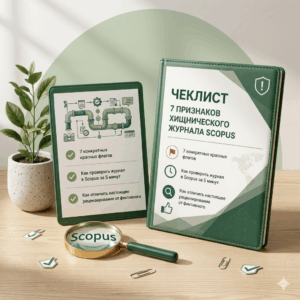
We have prepared a practical checklist titled «7 Signs of a Predatory Scopus Journal.».
It includes:
✅ 7 specific red flags that are easy to check on your own
✅ How to Check a Journal in Scopus in 5 Minutes
✅ How to Tell the Difference Between Genuine Peer Review and Sham Peer Review