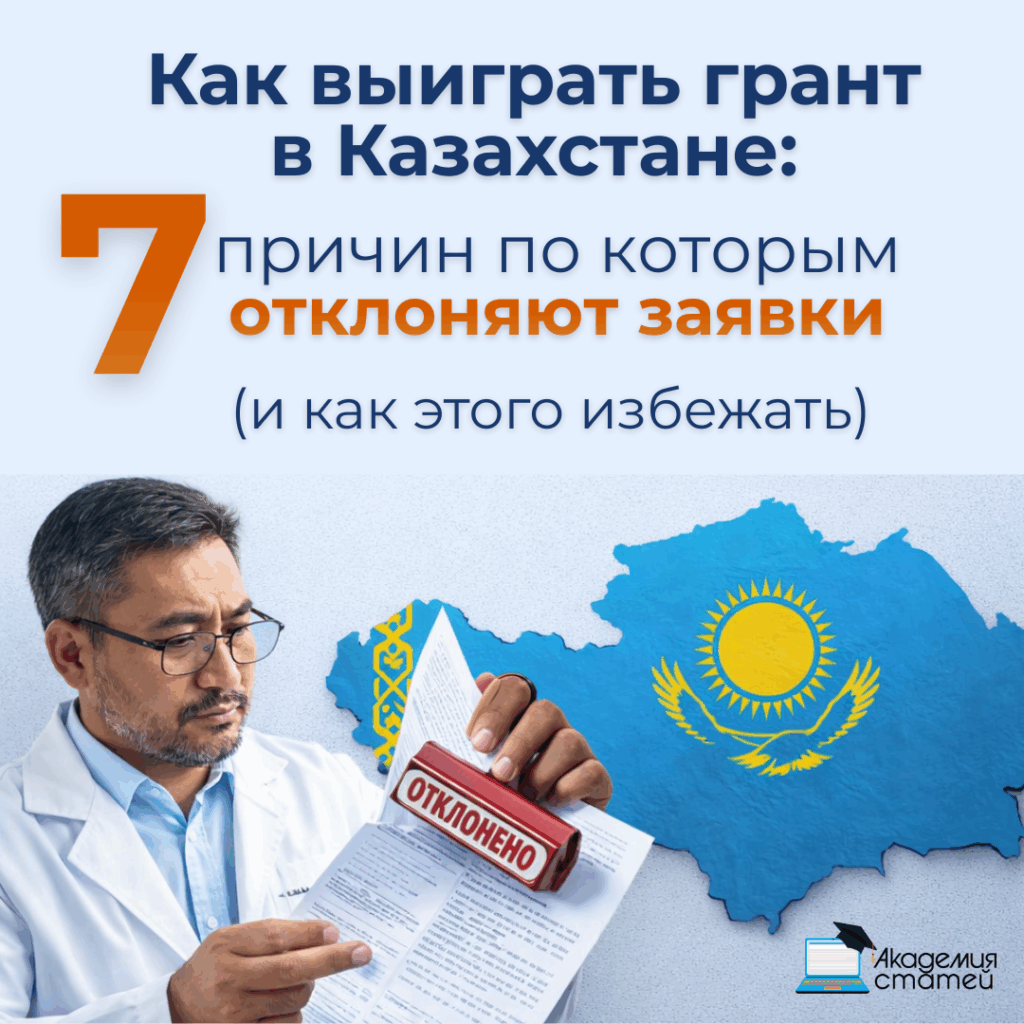
If you are a doctoral student, PhD, associate professor, or professor in Kazakhstan—and still think that grants are «only for the select few»—this article is for you.
We’ve analyzed 5 key grant competitions organized by government agencies in Kazakhstan: who is eligible to apply, what the funding amounts are, and most importantly—how they relate to publications in Scopus and the KOKSNVO MNVO of Kazakhstan.
Some competitions have already closed the application period for the 2026–2028 cycle. But two out of five are open right now—and it’s important not to miss them.
Spoiler: Almost everywhere, publications in Scopus are not a «bonus,» but rather a mandatory requirement for admission.
Why Is This Important Right Now?
It's already 2026—and some competitions closed their application periods back in the fall of 2025. But that doesn't mean the window of opportunity has completely closed.
First, two of the five competitions are currently open: commercialization (until March 10, 2026) and research internships (until October 25, 2026).
Second, the Science Committee’s grants for the next cycle will open in the fall of 2028. This means that if you don’t yet have the necessary Scopus publications, now is the time to get them so you don’t find yourself in the same situation two years from now.
And the key barrier that weeds out researchers as early as the submission stage is the lack of publications in Scopus with the required percentile.
Let's take a closer look at what these contests actually require.
1. Grant Funding for Scientific and Scientific-Technical Projects for 2026–2028
Issued by: Science Committee of the Ministry of Natural Resources and Environment of the Republic of Kazakhstan
What for: fundamental and applied research in seven priority areas—ranging from digital technologies to agriculture and national security.
Project budget:
- Natural, technical, and medical sciences — up to 110 million tenge;
- Social Sciences and Humanities — up to 80 million tenge;
- Projects involving the purchase of equipment—up to 140 million tenge.
Requirements for the research advisor:
- Citizenship of the Republic of Kazakhstan; a PhD or Doctor of Science degree;
- Publications for 2020–2025: at least 2 articles in WoS (Q1–Q3) or Scopus (CiteScore ≥ 50th percentile) + 1 publication in a KOKSNVO journal;
- For the humanities: 2 articles indexed in WoS/Scopus (≥30th percentile) + 2 KOKSNVO;
- At least 30% members of the group are 40 years old or younger.
Scopus/WoS publications:are mandatory—both for eligibility to participate in the competition and upon completion of the project (a minimum of 3 publications in WoS/Scopus Q1–Q3, with a CiteScore ≥ the 60th percentile for fundamental research projects).
Deadline:October 6 – November 6, 2025 (Applications for the 2026–2028 cycle are closed; the next cycle begins in fall 2028)
2. Grant Funding for Young Scientists for 2026–2028
Issued by: Science Committee of the Ministry of Natural Resources and Environment of the Republic of Kazakhstan
What for: research initiatives by young scientists in the same seven areas.
Project budget:
- Natural, technical, and medical sciences — up to 90 million tenge;
- Social Sciences and Humanities — up to 75 million tenge.
Requirements:
- The leader — no older than 40, and all group members are also no older than 40;
- Publications: 2 articles in WoS (SCIE) or Scopus (CiteScore ≥ 35th percentile) + 2 articles in KOKSNVO—or 2 articles in WoS Q1–Q3 / Scopus ≥ 50th percentile.
Scopus/WoS Publications: are required. The final requirement is at least 2 publications in WoS/Scopus (CiteScore ≥ 50th percentile).
Deadline: September 25 – October 25, 2025 (Applications are closed; the next cycle is in fall 2028)
3. The «Zhas Galym» Grant (Postdoctoral Fellowship) for 2026–2028
Issued by: Science Committee of the Ministry of Natural Resources and Environment of the Republic of Kazakhstan
What for: An individual grant for postdoctoral research. One researcher—one application, one project.
Project budget:
- Natural, technical, and medical sciences — up to 90 million tenge;
- Social Sciences and Humanities — up to 75 million tenge.
Requirements:
- Citizen of the Republic of Kazakhstan, no older than 40;
- A PhD, a Candidate of Sciences or Doctor of Sciences degree, or completion of a doctoral program;
- Publications in peer-reviewed journals indexed in WoS/Scopus or KOKSNVO in the researcher’s field.
Scopus/WoS Publications: are required both for admission and upon completion of the project.
Deadline: September 29 – October 29, 2025 (Applications are closed; the next cycle is in fall 2028)
4. Grant Funding for Projects to Commercialize Scientific Research for 2026–2028
Issued by: Science Foundation, JSC (on behalf of the Science Committee of the Ministry of Higher Education and Science of the Republic of Kazakhstan)
What for: Practical application of scientific research—prototypes, technology implementation, and the creation of pilot models.
Amount: based on previous contests — up to 350 million tenge for the project. The grant recipient must provide co-funding amounting to at least 45% of the grant amount (for legal entities).
Requirements:
- The applicant is a legal entity (university, research institute, company);
- The project must have a scientific and technical basis: R&D supported by publications or patents;
- Specific requirements are outlined in the bid documents.
Scopus/WoS Publications: They are not required, but they significantly enhance the competitiveness of the application.
Deadline: ⚡ The deadline has been extended to March 10, 2026 — We're still accepting applications!
5. «Research Internships» Program («500 Scientists») — 2026
Issued by: Center for International Programs, JSC / Ministry of National Education and Science of the Republic of Kazakhstan
What for: Research internships lasting from 3 to 12 months at leading universities and research centers around the world.
Funding: Full coverage at the government's expense:
- Internship compensation;
- Round-trip flight;
- Health insurance;
- Monthly stipend (amount varies by country);
- Visa fees.
In 2026—approximately 250 scholarships.
Requirements:
- Citizenship of the Republic of Kazakhstan;
- Degree: Doctor of Science, Candidate of Science, PhD, Doctor of a specific field, or Master's degree;
- Continuous work experience at an accredited scientific institution—at least 12 months;
- An unconditional invitation from a foreign organization;
- Proficiency in the official language (KAZTEST ≥ B1) and a foreign language.
Scopus/WoS Publications: required — At least one article or review indexed in WoS, Scopus, or KOKSNVO.
Deadline: Document submission — starting at April 29 through October 25, 2026. The contest is now open.
Summary

16 items the commission checks—are you sure everything is ready?
Get the checklist for free—make sure your application passes the review.
What do almost all of these grants have in common?
Publications in Scopus and WoS are your ticket in.
Without them, you won't even make it past the initial screening. And it's not just about having an article in the database—specific percentiles are required: 35+, 50+, and sometimes 60+.
If you plan to apply for a grant in the next cycle, you should start putting together your publication portfolio now.
In Summary: What's Important to Understand Right Now
Grants in Kazakhstan mean real funding for science. Hundreds of millions of tenge, international internships, and funding for the next 2–3 years. All of this is available to Kazakhstani scientists.
But almost every contest requires the same thing: publications in Scopus at a specific percentile.
Three takeaways from this article:
First, if you plan to apply for grants from the Science Committee, the next application window will be in the fall of 2028. You need to start preparing your publication portfolio now, not in 2027.
Second, there are two calls for proposals currently open: commercialization (due March 10, 2026) and research internships (due October 25, 2026). If you already have publications, go for it.
Third, you don't just need «an article in Scopus»; you need an article with the right percentile, published by the right deadline, in a journal that the committee will actually accept.
How It Works in Practice: The Aidos Case Study
Aidos—a PhD and professor of oncology from Astana—had already won a grant from the Science Committee of the Ministry of National Education and Science of the Republic of Kazakhstan, but under the terms of the contract, he needed a publication in a Scopus Q2 journal (65th percentile or higher) and an increase in his Hirsch index—all within a tight deadline. We completed the task in 6 months: from selecting a journal to indexing.
«The guys came up with an option that I wouldn't have considered myself. In the end, everything worked out—both in terms of timing and budget.»
— Aidos, Ph.D., Professor, Astana (For the sake of confidentiality, we have changed the client's real name!)